
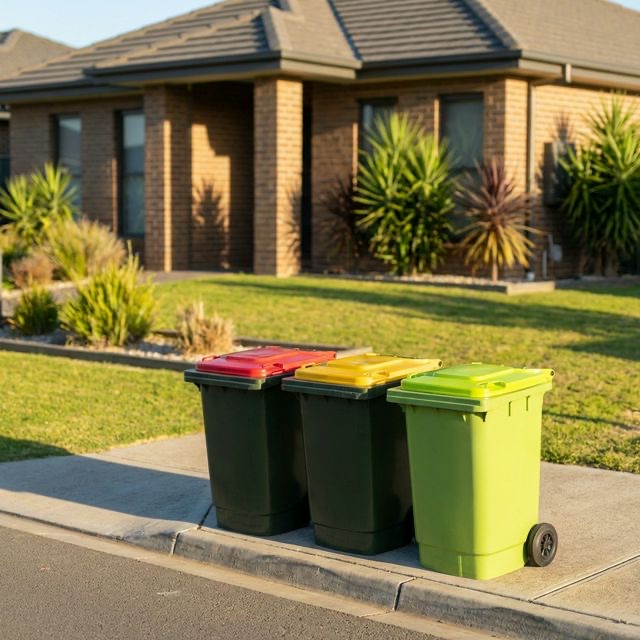
If you've just arrived in Australia, one of your first surprises might be the number of bins sitting at the end of every driveway. Red lid, yellow lid, green lid - and in some states a purple one too. Each bin has strict rules about what goes in, and getting it wrong can mean your bin is left unemptied, or worse, a fine from your local council.
Australia's recycling system is one of the most structured in the world, and it works differently from most countries in Asia, Europe, and the Americas. Whether you're renting your first apartment or settling into a family home, understanding the bin system is an essential part of Australian life. This guide breaks down everything you need to know - from bin colours and collection schedules to the container deposit scheme that pays you 10 cents per bottle.
Your Bins: What the Lid Colours Mean
Australia is standardising bin colours nationwide based on the Australian Standard (AS 4123.7). While some councils are still transitioning, the system works like this:
| Bin Lid Colour | What Goes In | Examples |
|---|---|---|
| 🔴 Red | General waste (landfill) | Nappies, broken crockery, soft plastics, food-soiled packaging |
| 🟡 Yellow | Mixed recycling | Paper, cardboard, glass bottles, aluminium cans, steel cans, hard plastic containers (1-7) |
| 🟢 Lime Green | FOGO (Food Organics Garden Organics) | Fruit scraps, vegetable peelings, meat bones, coffee grounds, lawn clippings, small branches |
| 🟣 Purple (VIC only) | Glass recycling | Glass bottles and jars only - no lids, no ceramics |
Not every council has all four bins yet. Most areas have at least three (red, yellow, green). Victoria is rolling out the purple glass bin to all councils by 2030. Check your local council's website for your specific setup.
Common Recycling Mistakes That Get Your Bin Rejected
Contamination is the biggest problem in Australian recycling. If your yellow-lid bin contains the wrong items, the entire load may go to landfill. Here are the most common mistakes:
- ❌ Plastic bags - Never put recyclables inside a plastic bag. Place items loose in the bin
- ❌ Soft plastics - Cling wrap, chip packets, and anything you can scrunch are NOT recyclable in your kerbside bin. Some Coles, Woolworths, and Aldi stores in NSW and VIC now accept soft plastics through in-store collection bins as part of a pilot programme - check if your local store participates
- ❌ Food-contaminated containers - Rinse jars and containers before recycling
- ❌ Coffee cups - Most takeaway cups are lined with plastic and cannot be recycled
- ❌ Nappies - These go in the red (general waste) bin
- ❌ Batteries - Never put batteries in any kerbside bin (they cause fires at recycling facilities)
- ❌ Polystyrene - Foam packaging, meat trays made of polystyrene are NOT recyclable kerbside
Council fines for contaminated bins range from $50 to $660 depending on your local area. Some councils use a "three-strikes" system - first a warning tag, then a non-collection, then a formal fine. Mornington Peninsula Shire in Victoria, for example, fines between $330 and $660 for repeat offenders.
Container Deposit Scheme: Get 10 Cents per Bottle
Every state and territory in Australia now has a Container Deposit Scheme (CDS) that refunds you 10 cents for every eligible drink container - cans, bottles, cartons, and more.
| State/Territory | Scheme Name | Key Details |
|---|---|---|
| NSW | Return and Earn | Containers 150 mL - 3 L eligible; wine/spirit bottles expanding mid-2027 |
| VIC | CDS Vic | Launched November 2023; find drop-off points at cdsvic.org.au |
| QLD | Containers for Change | Expanded November 2023 to include wine/spirit glass bottles |
| SA | SA Container Deposit | Australia's oldest scheme (since 1977); expanding to all beverages by 2027 |
| WA | Containers for Change | Expanding July 2026 to include wine/spirit bottles |
| TAS | Recycle Rewards | Launched 1 May 2025 - Tasmania's first CDS |
| NT | NT CDS | Expanding 2026 to include all beverage containers up to 3 L |
| ACT | ACT CDS | 10c refund at designated collection points |
Money-saving tip: A household of four can easily earn $5-$10 per week by collecting eligible containers. Many newcomers use this to cover small expenses or donate to local community fundraisers. Look for reverse vending machines at shopping centres - just feed in your bottles and cans to receive cash or an electronic refund.
Collection Day: How It Works
Your council collects bins on a set schedule - typically:
- General waste (red lid): Collected weekly
- Recycling (yellow lid): Collected fortnightly (every two weeks)
- Garden/FOGO (green lid): Collected fortnightly, alternating with recycling
- Glass (purple lid): Collected monthly (Victoria only, where available)
Bin Night Rules
- Put your bin out the night before collection day, lid facing the street
- Leave 30 cm between bins and away from parked cars, fences, and trees
- Don't overfill - the lid must close completely or the truck will skip your bin
- Bring bins back in within 24 hours of collection (some councils fine for bins left out too long)
Every council has a different collection day. When you move to a new address, check your council's website or download their waste app (most councils have one) to find your specific schedule. You can also call your council directly.
Hard Rubbish Collection
Most councils offer one to two free hard rubbish collections per year for large items that don't fit in your regular bins. This typically includes:
| ✅ Accepted | ❌ Not Accepted |
|---|---|
| Old furniture (sofas, tables, chairs) | Building materials (tiles, bricks, concrete) |
| Mattresses | Hazardous waste (paint, chemicals, gas bottles) |
| Whitegoods (fridges, washing machines) | Car parts and tyres |
| Scrap metal | Tree stumps, bamboo, palm fronds |
| Small electronic items | Asbestos (requires specialist removal) |
How to book: Contact your local council by phone or online. You'll usually need to book a specific date, and you can typically put out up to 3 cubic metres of items (roughly a small trailer load).
Tip: Check if neighbours are putting out items you might want - in many Australian suburbs, "hard rubbish season" is an unofficial secondhand shopping event. However, some councils have rules against removing items from the kerb once they're placed for collection.
E-Waste: What You Can't Throw Away
Since 2019, it has been illegal to put e-waste in landfill bins across most of Australia. E-waste is anything with a plug, battery, or cord - including:
- Computers, laptops, and tablets
- Mobile phones
- TVs and monitors
- Printers
- Kitchen appliances (toasters, kettles, microwaves)
- Power tools
- Batteries of all types
Where to Dispose of E-Waste
| Option | Details |
|---|---|
| Council drop-off centres | Most councils accept e-waste for free at transfer stations |
| Hard rubbish collection | Many councils accept small e-waste items during scheduled collections |
| Officeworks | Accepts old computers, tablets, and accessories for free recycling |
| MobileMuster | Free mobile phone recycling at most phone shops and Australia Post |
| Battery collection | Look for battery recycling bins at Bunnings, Aldi, and Officeworks |
Before disposing of any device: Back up your data, factory reset the device, and remove SIM cards. Your personal information must be wiped before recycling.
Transfer Stations (The Tip)
When you have waste that doesn't fit into any of the above categories, you can drive it to your local transfer station (Australians call it "the tip"). Key things to know:
- Fees apply - expect to pay based on vehicle size and waste type (a car boot load of general waste typically costs $15-$50)
- Some items are free - many transfer stations accept scrap metal, cardboard, car batteries, and e-waste from residents at no charge
- Waste levy - a state government levy applies on top of council fees (in Victoria, this is $169.76 per tonne from July 2025)
- ID or proof of address may be required to prove you're a local ratepayer
Tips for Newcomers: Getting It Right from Day One
- Check your council's website first - search for "[your suburb] council waste" on Google. Every council has a detailed guide specific to your area
- Download the waste app - most councils have a free app that sends you collection reminders and tells you which bin goes out when
- Ask your neighbours - Australians are generally happy to explain the bin system to newcomers
- Rinse before recycling - a quick rinse of jars, tins, and containers prevents contamination
- When in doubt, red bin - if you're unsure whether something is recyclable, put it in the general waste (red lid). It's better than contaminating the recycling stream
- Keep batteries separate - lithium batteries in bins cause fires. Take them to a dedicated collection point
How First Migration Can Help
Settling into Australian life involves more than just visa paperwork - it's learning the everyday systems that make your new home run smoothly. At First Migration Service Centre, our registered migration agents help you with the legal side of your move, so you can focus on getting settled.
Ready to take the next step? We invite you to submit a free visa assessment so we can understand your situation and provide tailored advice.
MARA Registered Agent
Registration No. 1569835
Certified by the Migration Agents Registration Authority. Your trusted partner for Australian visa applications.
Disaster Recovery Work on Your WHV: New Postcodes, What Counts & How to Apply

Working Holiday to Regional Visa: How Backpackers Become Permanent Residents Through 491
Backpacker Budget Calculator: Real Cost of Living on a Working Holiday in 2026
DASP Guide: How to Claim Your Superannuation When Leaving Australia
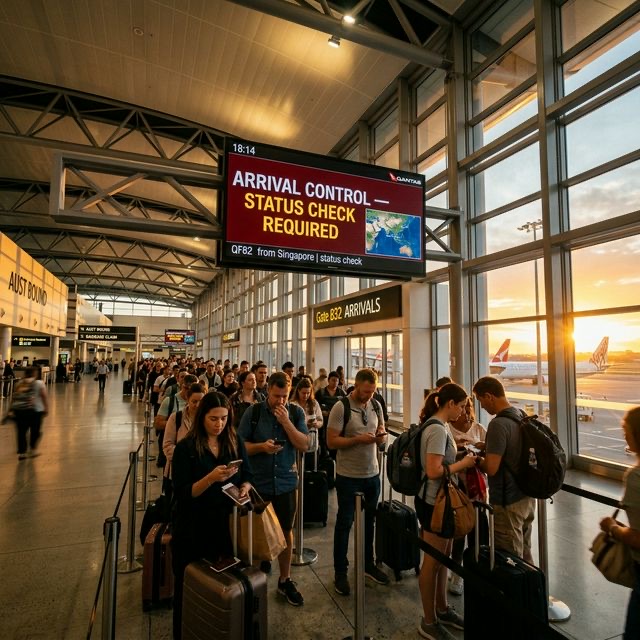
Australia Can Now Pause Your Visa at the Border: What the Arrival Control Act Means
Office Hours
Mon-Fri: 9AM-5PM Sat: 10AM-2PM